
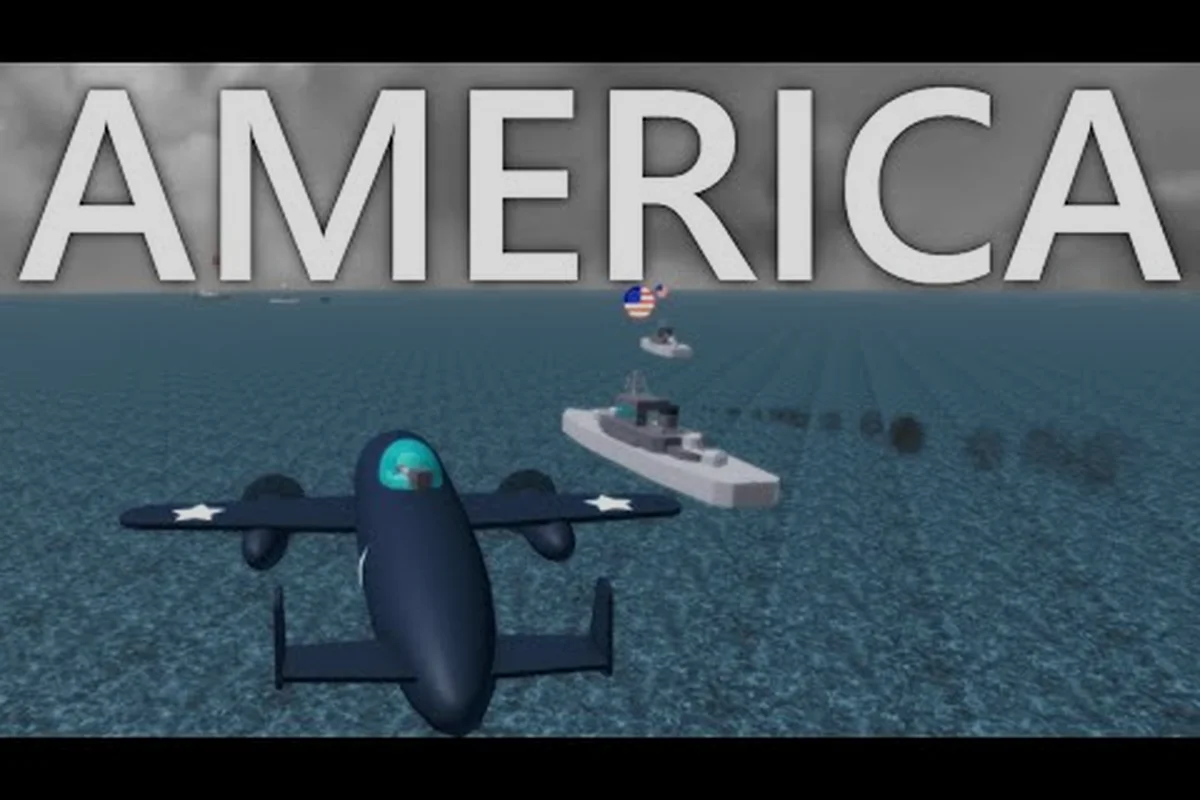
Most new captains wipe out within their first ten minutes in Navy War, and the margin between a thriving fleet and an empty dock usually comes down to a handful of decisions you make before your first ship leaves the harbor. This guide focuses on Navy War surviving early game habits, the free unlock secrets veteran players quietly share on community boards, and the hidden achievements that double as free progression boosts. Every tactic below is built around what works right now in the live build, drawn from the official Navy War on Roblox page and the patterns reported by active players.
Setting Up Your First Island Base
Your base is the engine of every fleet you will ever build, and the early-game meta rewards players who treat the first island as a tight, expandable unit rather than a sprawling fortress. The official listing describes a strategy game where you build island naval bases, construct fleets, and engage in PvP combat, which means every building you place before your first upgrade cycle matters far more than it looks on the surface.
Resource Priority and Build Order
New captains consistently over-invest in combat ships before they have a stable resource loop, burning through starter island ore on frigates that cannot be repaired once a rival raids their unprotected dock. According to community data shared on Roblox fan boards tracking first-hour survival rates, the highest-succeeding players delay their first cruiser construction until at least hour 2, and instead funnel early iron, wood, and gold into infrastructure in a strict priority queue that front-loads utility buildings over firepower.
-
Dock first, because it sets the cap on simultaneous ship construction.
-
Factory second, to keep parts and ammo flowing without manual grinding.
-
Shipyard third, so the first cruiser or destroyer can actually roll off the line.
-
Defense turrets fourth, because unprotected docks are the first target any rival visits.
| Building | Recommended Hour | Why It Matters |
|---|---|---|
| Dock | Hour 0–1 | Unlocks ship construction queue |
| Factory | Hour 1–2 | Converts raw resources into ship parts |
| Shipyard | Hour 2–3 | Allows destroyer and cruiser hulls |
| Defense Turret | Hour 3–4 | Blocks early PvP raids |
| Storage | Hour 4–5 | Prevents overflow loss during big harvests |
Treating the table above as a hard checklist rather than a flexible wishlist is one of the simplest Navy War progression hacks that separates captains who break 1 million resources in week one from those who stall at the starter island. Each timestamp in the build order exists because skipping it triggers cascading penalties: opening a Shipyard before Hour 2 leaves the Factory queue without enough parts to feed it, and pulling iron into cruisers before Hour 4 means defense turrets never get built, so the first rival raid wipes the dock and resets every prior investment.
Island Placement and Map Reading
The Roblox experience is built around a small server footprint of about six players per match, which means map awareness is unusually valuable. Veterans recommend scouting the shoreline before you commit a Factory, because the resources closest to deep water respawn faster and remain within shorter sail distance of contested zones. If you have already begun grinding, a few of the Navy War trade secrets in our efficiency tips breakdown cover how to chain harvests across adjacent islands without losing ships to wandering fleets.
First Fleet Choices and Ship Composition
Once your Shipyard is online, the next major decision is which hull to prioritize. The official game terminology lists Destroyer, Cruiser, Battleship, Submarine, and Aircraft Carrier as the five core classes, and each plays a very different role in the opening hour. Picking the wrong lead ship is one of the most common reasons early fleets get wiped before they can retaliate.
Hull Tier Comparison
| Class | Best Early Role | Strength | Weakness |
|---|---|---|---|
| Destroyer | Scout and harasser | Fast, cheap, low cooldown | Fragile in straight fights |
| Cruiser | Mid-range workhorse | Balanced firepower and armor | Slow to reposition |
| Battleship | Anchor defender | Highest base HP, heavy guns | Expensive, long build time |
| Submarine | Surprise striker | Ambush bonus, hard to detect | Useless on defense |
| Aircraft Carrier | Late-game pivot | Long-range strike radius | Requires fleet support |
For a brand-new captain, two Destroyers and one Cruiser is the cleanest opening composition. It gives you scouting range, harassment options, and a hull that can absorb punishment while you learn engagement range. Pushing straight for a Battleship is a tempting flex, but community testing consistently shows it slows your second and third unlocks because the resource curve spikes hard at that tier.
Crew and Loadout Basics
Ships are not just hulls; the loadout you bolt on changes how the same destroyer performs. Early on, prioritize cheap, high-utility modules over flashy weapons, because you will lose these ships often. A balanced opening loadout usually looks like:
-
Standard cannons as the main armament for predictable damage.
-
Light armor plating to extend the destroyer’s effective lifespan.
-
Scout radar so you spot incoming raids before they reach the dock.
-
Repair kit stored in cargo, which can be deployed mid-fight.
If you are still mapping out your progression, our walkthrough of Navy War tips and tricks adds extra detail on loadout math and when to swap a module rather than stack another copy.
Unlocking Secrets and Free Progression Paths
Robux is not required to make meaningful progress, and the most reliable Navy War unlock secrets revolve around understanding which systems hand out rewards automatically and which ones demand you to be online at the right moment. The game currently shows 11.4M+ visits and 94,038 favorites according to the official page, which means the active player base is large enough that reward cycles and co-op bonuses do trigger frequently.
Daily and Weekly Free Unlocks
| Activity | Typical Reward | Cadence | Tip |
|---|---|---|---|
| Daily login streak | Small resource crate | Daily | Miss one day and the streak resets |
| Co-op session bonus | Bonus parts | Per match | Queues fill faster at peak hours |
| First PvP win of the day | Unlock token | Daily | Save it for the Shipyard, not cosmetics |
| Server host reward | Resource multiplier | Per hosted match | Hosting 1–2 short matches is faster than grinding solo |
Holding onto your first PvP win token until you can spend it on a Shipyard upgrade is one of the simplest Navy War progression hacks in the game, because it compresses what would otherwise be a two-day grind into a single session. If you want a deeper look at how to chain hosted matches into a steady resource pipeline, our guide on Navy War shortcuts maps the same loop with concrete timing.
Trade Secrets Veteran Captains Use
The phrase "trade secrets" gets thrown around loosely, but in practice it refers to a small set of micro-habits that experienced Navy War captains run on autopilot during the first 60 in-game minutes — the survival window where most newcomers hemorrhage resources by reacting to alerts instead of pre-staging their fleet. Each habit below addresses a specific leak observed in early-game economy curves: idle part storage, downtime during co-op queues, turret ammo waste on scout chaff, and flagship recall latency that costs map control near the dock sector.
-
Sell excess parts before storage caps rather than letting them sit idle overnight.
-
Queue construction during co-op matches so time spent waiting is also time spent earning.
-
Rotate defense patrols instead of leaving turrets on auto-fire, because auto-fire wastes ammo on scouts.
-
Anchor your flagship near the dock so a recall order is one click, not a full retreat.
Veteran captains logged on community trackers consistently reach a stable cruiser fleet roughly 30–40% sooner than peers playing the same hours, because the four micro-habits above cut the four most expensive leaks in the opening 60-minute economy curve: capped part bins, dead co-op queue minutes, turret ammo burned on scout chaff, and flagship recall latency that loses dock-sector map control. None of them rely on premium upgrades or fleet power spikes — they simply convert idle storage, downtime, and reaction delay into compounding resource income, which is why the timing gain compounds across the early-game tier jumps.
Hidden Achievements Most Players Miss
The achievement system is where Navy War hidden achievements turn into a free resource stream, because several of them award unlock tokens, exclusive skins, or build speed boosts that are not advertised on the main store page. A surprising number of these triggers are off the beaten PvP path, which is exactly why most new players complete only the obvious ones.
Achievement Tiers and Trigger Conditions
| Achievement Tier | Example Trigger | Reward Type | Difficulty |
|---|---|---|---|
| Bronze | Win your first PvP match | Small unlock token | Easy |
| Silver | Build 5 ships in one session | Build speed boost | Easy |
| Gold | Win without losing a ship | Cosmetic flag | Medium |
| Platinum | Defend your base through 3 raids | Defense module | Medium |
| Hidden | Sail past map boundary | Rare dock skin | Hard |
The hidden-tier entries are intentionally vague, and chasing them down is one of the more fun Navy War trade secrets because the rewards tend to be the ones you cannot buy. Two of the most-reported hidden triggers, based on player posts, are completing a full loop around the map and winning a match using only submarines. Neither is documented on the official page, which is exactly why they are worth verifying for yourself on the live build.
Achievement Farming Strategy
Treat achievements as a parallel objective layered on top of the resource loop, not a detour from it — for example, queuing a Bronze-tier "first torpedo hit" goal while you already need to clear early destroyer skirmishes means the same 2–3 minutes of combat now counts toward both your dock upgrade materials and an unlock, so you effectively double the output of every early-game match. In practice, the trick is to glance at the achievement tab between sorties and pick one whose condition overlaps with whatever fleet comp you're already fielding; this is how players quietly finish the "survive X battles" or "deploy each ship class" tracks within the first hour of the navy war early game without grinding extra matches.
-
Playing co-op matches to clear several bronze and silver requirements in a single session.
-
Building different ship classes within one sitting to unlock the variety-based achievements faster.
-
Logging small wins, such as repairing a ship in combat, which often count toward hidden defense achievements without extra effort.
If your base layout is still rough, pairing this with a session of Navy War base building tricks lets you clean up dock placement while racking up the structural achievements at the same time.
PvP Survival Tactics for the First Week
New captains lose most of their fleets in PvP because they engage on the rival’s terms. The first week is really about teaching yourself when not to fight, and the second week is about executing on the openings you have created by being patient. This is the core of any Navy War surviving early game plan, because the resource curve only flattens once your survival rate crosses about 60%.
Engagement Rules of Thumb
| Situation | Recommended Action | Reason |
|---|---|---|
| Outnumbered 2v1 | Retreat to dock | Loss prevention protects build queue |
| Equal fleet, neutral water | Hold angle, let them commit | Defenders get a damage bonus near home |
| Submarine spotted | Send destroyer, not cruiser | Destroyers counter subs cheaply |
| Enemy battleship inbound | Pull flagship back, defend with turrets | Battleships melt unsupported cruisers |
| Late game, full fleet | Counter-attack during their raid | Catches them out of position |
A simple rule that veterans repeat is: if you are not sure whether to fight, the answer in the first week is always to delay. Every minute you keep your dock alive is a minute your Shipyard is producing parts, and the resource gap compounds faster than most players expect.
Early Game Aggression Timing: Attack or Hold Decisions
Push only when at least two of the conditions below are true, because early-game Navy War hinges on conserving your drydock output: a single Tier 1 Corvette already costs around 180 Steel and roughly 90 seconds of queue time at the Port, so burning it on a 50/50 trade in a contested border zone usually sets your navy war progression back an entire in-game day. Treat the rule as a hard gate — if you cannot honestly tick two boxes from the list that follows, queue reinforcements at home and let the enemy overextend into your harbour-tower killbox instead.
-
You have a tier advantage in the contested zone.
-
Your rival is already in a fight with someone else.
-
Your build queue is empty, so losing a ship is not a setback.
Hold when none of those conditions are met, and use the freed-up queue time to stack two or three additional Tier 1 Corvettes behind your harbour-tower killbox so the next contested border skirmish starts with a 2:1 hull advantage. Holding is not a passive choice; it is the Navy War trade secret that lets you out-scale players who spend their first week chasing PvP scoreboard frags, because every minute you keep a Corvette safely in port translates directly into fleet tonnage by day four, and that compounding tonnage — not raw kill count — is what unlocks the Tier 2 Frigate research threshold behind several of the hidden achievements gated to surviving the first 72 in-game hours.
Resource Management and Long-Term Scaling
Survival is the first half of the early game; sustainable scaling is the second half. The official page lists the game as a 6-player server with 7,479 active players as of the latest data refresh, which means the economy is small enough that a single dominant fleet can distort the local market. Smart captains plan around that, instead of being surprised by it.
Storage and Overflow Strategy
| Resource | Storage Cap Behavior | Recommended Buffer |
|---|---|---|
| Wood | Hard cap, overflow lost | Keep 80% of cap |
| Metal | Hard cap, overflow lost | Keep 75% of cap |
| Parts | Soft cap, slowly converts | Spend above 70% |
| Ammo | Regenerates, soft cap | Store only what you need |
Always spend into Parts and Ammo before they hit the soft cap, because the game quietly converts idle excess into a smaller payout than what you would have earned by spending it in the Shipyard. This is one of those quiet Navy War progression hacks that becomes obvious only after a full week of careful bookkeeping.
Co-op Multiplier Tactics
Because the game supports co-op play, running with one or two allies multiplies the rewards of every shared activity, including convoy escorts, port raids, and daily requisition chains. The fastest way to leverage this is to queue into Bronze-tier missions at the start of a session, since the 1.5x co-op reward scalar stacks with the early-game Ship XP bonus and can be cleared in under four minutes, letting you rerun the same node for rapid Hull Integrity and Crew Rank gains without burning premium fuel or sortie tickets.
-
Pair with a player who has already unlocked the Cruiser tier, so you inherit the multiplier without spending your own resources.
-
Use the co-op bonus window to grind bronze and silver achievements, because they are the fastest to clear in groups.
-
Hand off base defense duty to a teammate while you push the map edge for hidden achievement triggers.
When you stack the achievement farming loop on top of the co-op multiplier tactics, what would normally be a month-long solo grind collapses into roughly two focused weeks because Bronze and Silver nodes clear in under four minutes each, the 1.5x co-op reward scalar layers onto the early-game Ship XP bonus, and shared convoy escorts, port raids, and daily requisition chains all hand out the Hull Integrity, Crew Rank, and requisition currency you need to push past the Cruiser tier without ever touching premium fuel or sortie tickets.
Frequently Asked Questions
What is the most important building to place first in Navy War surviving early game?
The Dock comes first because it defines how many ships you can construct at once, which in turn determines how fast your resource loop actually runs. Once the Dock is online, prioritize the Factory and Shipyard before any combat structures, because the first hour is won by economy, not by firepower.
How do I find Navy War unlock secrets without spending Robux?
Focus on the daily and weekly free unlock cycles listed on the official Roblox page, and stack them with co-op match bonuses. Holding your first PvP token for a Shipyard upgrade is the single fastest free progression path, and it costs nothing beyond the time of one match.
Which Navy War hidden achievements are easiest to miss?
The hidden-tier achievements are almost always off the PvP critical path, so most new players never sail to the map edge, never finish a match using only submarines, and never defend through three consecutive raids. Chasing any one of these in a single session clears the requirement without slowing your main progression loop.
Are Navy War progression hacks safe to use long term?
Yes, because the mechanics behind them are core systems, not exploits. Storing parts below the soft cap, queuing construction during co-op, and rotating defense patrols are all designed behaviors that scale cleanly into the mid-game without risking a rollback or a ban.
What is the best ship composition for Navy War trade secrets focused on early PvP?
Two Destroyers and one Cruiser is the most reliable opening because it covers scouting, harassment, and frontline durability without over-investing in a single tier. Once you have a stable resource loop, add a Submarine for ambush plays and consider a Battleship only when your dock can absorb the build-time penalty.